
Decarbonisation with Lerten
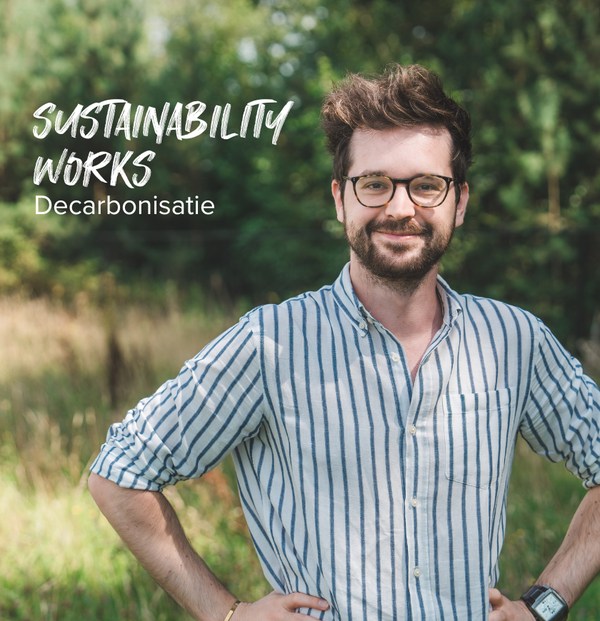
Welcome to the Sustainability works: Decarbonisation page featuring our CO₂ expert Lerten. In this series, you’ll find practical answers to your questions about CO₂ reduction and how businesses can effectively tackle their emissions. Every week, Lerten shares his insights on the challenges and solutions for decarbonisation, always starting with a thought-provoking statement that encourages you to rethink your approach.
Lerten challenges you to look beyond the clichés and get to grips with the complexity of CO₂ strategies.
Whether it’s a lack of resources, time or knowledge, he offers clear solutions that help companies achieve their climate goals.
Follow this page for videos, short social media snippets and in-depth content, specifically focused on CO₂ reduction and sustainable impact.
1. Short-term, medium-term and long-term goals of a decarbonisation strategy
Lerten explains how to develop an effective CO₂ strategy with short-, medium- and long-term goals. Discover how each goal contributes to a realistic roadmap towards CO₂ neutrality and why it is essential to plan for both quick wins and sustainable progress.
2. How to develop a feasible decarbonisation strategy for your business
What makes a carbon strategy feasible for your business? Lerten shares the keys to success: from understanding your current carbon footprint to setting realistic targets and deploying the right resources.
What is the CO₂ Performance Ladder and how does it work?
Curious to find out how the CO₂ Performance Ladder can help your business grow sustainably? In this video, we explain what it is and how it works, so you can take steps towards a more sustainable future!
4. What are the different levels of the CO₂ Performance Ladder and what do they entail?
Curious to know how the CO₂ Performance Ladder works and what each level means for your organisation? In this video, we take an in-depth look at the structure of the CO₂ Performance Ladder, from the basic level to the highest level of performance. Discover how each level contributes to reducing your carbon footprint and how you can help your business move further towards sustainability. Watch and gain insight into the steps towards a greener future!
5. How can companies use CO₂ Performance Ladder certification to win tenders and contracts?
Companies that are serious about reducing their CO₂ emissions use the CO₂ Performance Ladder as a management system to systematically reduce their emissions and gain an edge in tenders. This system is particularly attractive for construction companies bidding for public contracts. In this blog, we explain what the CO₂ Performance Ladder is, how it works and how your company can benefit from it.
6. What is the SBTi and how can a company use it?
Science Based Targets (SBTi) help companies set clear targets that contribute to mitigating climate change. In this video, we explain exactly what the SBTi entails and how your company can use it to become more sustainable. Discover how to make science-based decisions that fit with a future-proof strategy.
7. What does the SBTi have to do with net zero?
Science Based Targets (SBTi) and net zero are inextricably linked when it comes to tackling climate change. In this video, you’ll discover how the SBTi helps companies set concrete targets to achieve net zero. Find out how your organisation can contribute to a carbon-free future.
8. How can a company communicate effectively about CO₂ reduction?
In a world where sustainability is increasingly influencing the choices of customers and partners, it is essential for companies to communicate their efforts in the area of CO₂ reduction clearly and effectively. Sharing your successes in this area not only strengthens your competitive position, but also builds trust and long-term relationships with stakeholders. In this video, we discuss how, as a business, you can translate your CO₂ performance into a clear message that inspires your customers and supports your sustainability ambitions.
9. What are the financial benefits of reducing CO₂ emissions?
Reducing CO₂ emissions offers more than just a sustainable image. Companies that invest in cutting their emissions often save on energy and operational costs, whilst also qualifying for grants and tax incentives. Discover how sustainable choices can boost profitability and contribute to a stronger market position.
10. What are the non-financial benefits of reducing CO₂ emissions?
The benefits of CO₂ reduction extend beyond financial gain and touch on many aspects of your business. It helps ensure compliance with laws and regulations, provides Marketing and Sales with a powerful narrative, and enables HR to promote an attractive, sustainable working environment. Discover how CO₂ reduction helps your organisation achieve valuable benefits for people, the environment and your market position.
11. Does a life cycle assessment make CO₂ reduction more transparent?
This video explains how a life cycle assessment (LCA) helps companies understand their carbon footprint and identify effective reduction strategies. Find out why this is essential for sustainable growth!
12. What does the CSRD stipulate regarding CO₂ reduction?
The Corporate Sustainability Reporting Directive (CSRD) sets out clear requirements regarding how companies report on and reduce their carbon emissions. But what steps are needed to comply with these requirements?
13. What is a building’s carbon footprint?
Buildings have a major impact on the climate. But how do you calculate a building’s carbon footprint, and what factors contribute to it?
14. How can a business reduce a building’s carbon emissions?
Buildings are a major source of carbon emissions, but there are many ways to minimise their impact. From energy-efficient technologies to sustainable materials – find out which measures really make a difference.
Reducing CO₂ emissions?
Discover the benefits for your business

The need to reduce CO₂ emissions is becoming increasingly urgent, not only for environmental reasons, but also because of the benefits that businesses can gain. A targeted approach to reducing CO₂ emissions offers both financial and non-financial benefits, and is therefore a strategic decision for businesses seeking to grow sustainably.
Get a head start on the competition with the CO2 Performance Ladder

Companies committed to reducing their carbon footprint use the CO2 Performance Ladder to systematically cut their emissions and gain an advantage in tendering processes. It is particularly valuable for construction firms bidding for public sector contracts. In this blog, we explain what it is, how it works and how your company can benefit from it.
How to develop an effective decarbonisation strategy for your business

Sustainability is crucial to the success of your business. Reducing CO₂ emissions is not only a legal requirement, but also essential to remaining competitive. Wondering how to develop a feasible decarbonisation strategy and set targets? Find out more in our blog and take steps towards a sustainable future!
The role of the SBTi in your sustainability strategy

Sustainability is no longer optional, but an essential pillar that can make or break your business. Not only because reducing your CO₂ emissions is now a legal requirement, but also because making your business processes more sustainable is essential to remaining competitive. But what exactly does decarbonisation entail, and how do you go about it? In this blog, we lift a corner of the veil.
